
Insights from Father Felix at Holy Trinity Church on 24 July
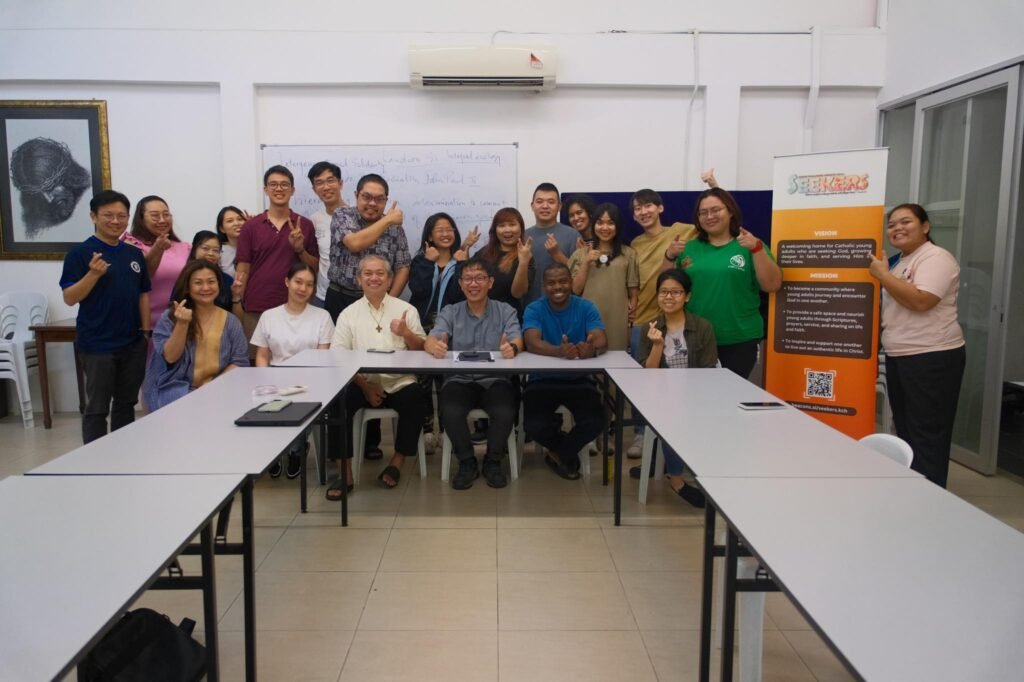
Attending the session on Catholic Social Teaching (CST) led by Father Felix, organized by the Seekers young adult group at Holy Trinity Church, was a profound experience for me.
This was my first time attending a sharing on a significant topic and it gave me a chance to engage deeply with the core principles of CST. As I reflected on the lessons shared, I realized how pertinent these teachings are to the current economic environment we face.
In our rapidly changing world, where economic disparities, social injustices, and environmental crises are increasingly visible, the Church’s teachings offer a moral compass to navigate these challenges… Father Felix began the session with the story of the Good Samaritan from the Gospel of Luke—a powerful parable that illustrates compassion and the importance of caring for others, regardless of their background. This story set the tone for understanding CST: it emphasizes undergoing a transformation of heart that leads us to act justly and with love, particularly toward the needy.
Father Felix explained that CST isn’t just a set of abstract ideas but a living tradition that evolves to address contemporary social, economic, political, and environmental issues. Born from the hardships brought by the Industrial Revolution, CST responds to the struggles of workers, the economically marginalized, and the complexities of modern society. This historical context frames CST as a necessary commentary on the human condition, reminding us of the Church’s commitment to advocating for justice and dignity for all people.
The teachings encapsulated in CST remind us that the Church is not a passive observer but an active participant in social advocacy. For instance, the preferential option for the poor and vulnerable urges us to focus on those most affected by economic exploitation. When I think about the growing divide between the wealthy and the underprivileged in our current economic climate, it becomes clear that CST speaks directly to this injustice. It calls us to not merely acknowledge these inequalities but to actively work against them through responsible actions and decisions.
To summarize my learning from Father Felix’s insights
L – Love for Humanity
At the heart of CST is the command to love others selflessly, resonating deeply with the story of the Good Samaritan. This love bridges social, economic, and cultural divides, fostering solidarity.
I – Integral Development
This principle emphasizes that true progress encompasses more than just economic growth; it must consider social and cultural factors too. We cannot pursue profits at the expense of people’s dignity or the health of our planet.
F – Focus on the Common Good
CST advocates for structures and policies that promote the well-being of all, ensuring that everyone’s rights and needs, particularly those of the vulnerable, are addressed.
E – Engagement in Justice
This calls for active participation in social and political life. Each Catholic is urged to contribute positively to the world around them, aligning actions with the values of social justice and equity.
Reflecting on these principles, I am motivated to consider how I can embody these values in my daily life. With the economic environment being what it is today—characterized by rising living costs, job insecurities, and social divides—the teachings of CST become even more vital. Sometimes, it feels overwhelming to consider the vastness of these issues.
In focusing on integral development, we recognize that any progress made must prioritize human dignity and address the broader social implications of economic policies. For example, when companies adopt fair labor practices or governments implement social safety nets, they create an environment where dignity is upheld. This ties back to CST’s emphasis on the dignity of work—an idea that highlights the need for fair wages, safe working conditions, and respect for workers’ rights.
Father Felix shared the importance of solidarity during the session—encouraging us to support one another as a community all while remembering that our actions carry broader implications. Solidarity calls us not only to empathize with the plight of others but to act upon those feelings by taking tangible steps—volunteering, advocating for change, or simply engaging with our local communities in meaningful ways.
A crucial aspect of CST is environmental stewardship—caring for God’s creation. In today’s context, where climate change poses significant threats to livelihoods and ecosystems, CST serves as a compelling reminder of our responsibilities. This teaching encourages us to advocate for sustainable practices that protect the environment while promoting social equity. The Church’s call to “care for God’s Creation” is a direct challenge to modern consumerism that prioritizes convenience and profit over the well-being of our planet. We are reminded that our spiritual lives are interconnected with the ecological well-being of creation.
Before the session concluded, Father Ramon affirmed the importance of sharing such insights… According to him, as our Sharer Father Felix has noted, CST may be coined as “the Church’s hidden treasure” in as much as this teaching is so precious and valuable, a huge gift for humanity’s good and growth, but sadly it is not talked about (by both clergy and lay… at least compared to the other teachings of the Church), and worse, not practiced as much as we should. If only we would…
Father Ramon reminded us how necessary it is for Catholics to engage with these teachings actively. As we explore spiritual worship, healing, and community-building, introducing discussions around CST will enhance our understanding and action toward a more just world.
This sharing illuminated the path forward, integrating faith with social responsibility. As the session wrapped up, I was left contemplating the words of Micah 6:8: “He has shown you, O mortal, what is good. And what does the Lord require of you? To act justly and to love mercy and to walk humbly with your God.” I trust this verse can encapsulates the heart of CST and serves as a guiding light for my actions moving forward.
The teachings offer a profound lens through which to view the current challenges we face—reminding us that our faith calls us not to complacency but to active engagement for the betterment of humanity and the conservation of our planet.
I am reminded of the words from Proverbs 31:8-9, which say:
“Speak up for those who cannot speak for themselves; ensure justice for those being crushed. Yes, speak up for the poor and helpless, and see that they get justice.”
This verse encapsulates the heart of CST and calls us to not merely listen but to act. It urges us forward, motivating us to embrace the principles of our faith, advocating for a just society, and enhancing the dignity of all people in our world.
Through reflections like the one I had with Father Felix and fellow seekers I am hopeful for myself and others in aligning our actions with such noble teachings, striving to create a more compassionate and equitable world.
Amen
Esthery
23 July 2025
Wednesday
Note: Originally posted on Esther’s Facebook Page.